




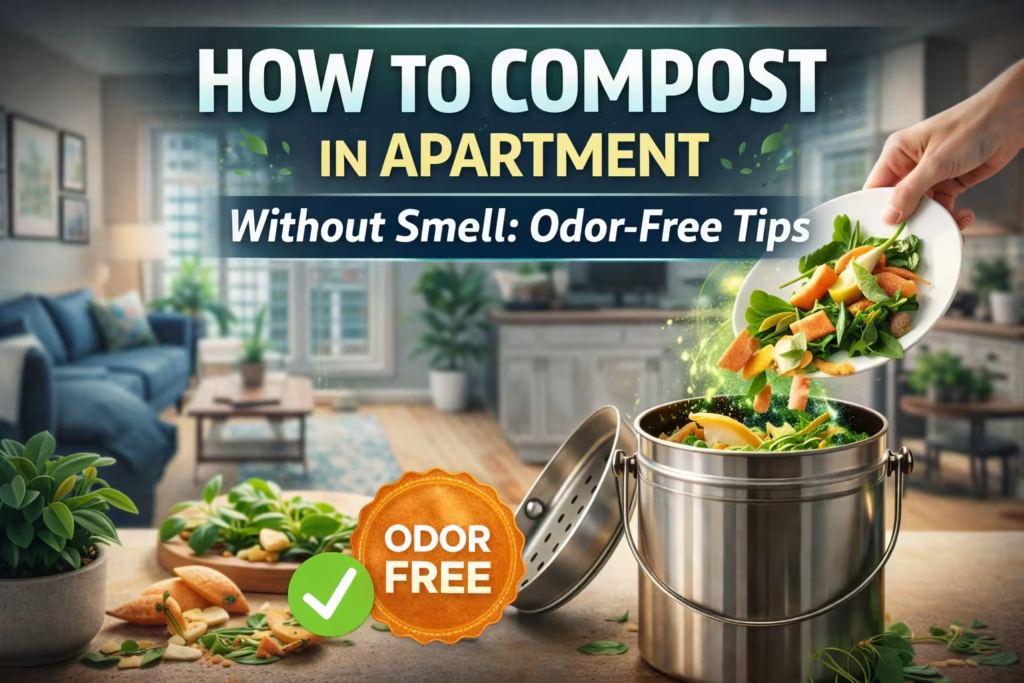
Composting In An Apartment Without Smell: The Complete Guide
Living in an apartment doesn’t mean you have to throw away all your kitchen scraps. You can still create rich compost right inside your home—even if you don’t have a yard. But many people worry about one thing: bad smells. No one wants their apartment to smell like rotten food or garbage. Luckily, you can compost without odor if you follow the right steps.
You might be surprised to learn that composting in small spaces is not only possible, but also clean and simple. With the right tools, a little knowledge, and careful habits, you can turn food waste into valuable compost for plants, balconies, or even community gardens. This guide will show you how to compost in an apartment without smell, from choosing the best bin to controlling moisture and common mistakes. You’ll get practical tips, real examples, and answers to questions beginners often ask.
Why Compost In An Apartment?
Composting helps the environment by reducing food waste. Instead of sending leftovers to landfills, you turn them into natural fertilizer. This process reduces methane gas, which is a harmful greenhouse gas. It also saves money if you grow plants or flowers, since you won’t need to buy fertilizers.
Apartment composting is convenient. You don’t need a yard or large outdoor space. Most composting systems for apartments are compact and easy to use. You can place them under the sink, in a closet, or on a balcony.
Many people think composting is messy or smelly, but that’s a myth. If you follow simple rules, your compost bin will be clean and odor-free. Plus, you’ll feel good knowing you’re helping the planet.
Understanding Composting Basics
Composting is a natural process where organic matter breaks down into soil-like material. In simple terms, you mix green materials (like fruit peels or vegetable scraps) with brown materials (like paper or dried leaves). Microbes and worms eat this mix and turn it into compost.
The Science Behind Composting
Compost needs four things:
- Greens – These are wet materials rich in nitrogen, like food scraps.
- Browns – Dry materials with carbon, such as paper, cardboard, or leaves.
- Moisture – Enough water for microbes to grow, but not too much.
- Air – Oxygen helps break down materials and prevents bad smells.
If you balance these, your compost will break down quickly and stay odor-free.
Common Misconceptions
Many beginners believe compost bins always smell. In reality, smell happens only when something is wrong—usually too much moisture, not enough air, or adding the wrong materials. Correcting these mistakes is simple, and you’ll learn how in this guide.
Choosing The Right Composting Method For Apartments
There are several ways to compost indoors. The right method depends on your space, lifestyle, and how much waste you produce.
1. Bokashi Composting
Bokashi is a Japanese method that uses special microbes. You add food scraps to a sealed bucket with Bokashi bran. This process is anaerobic (without air), so smells are minimal. Bokashi bins are small, making them ideal for apartments.
- Pros: Fast, no smell, can compost meat and dairy.
- Cons: Needs Bokashi bran, produces liquid that must be drained.
2. Worm Composting (vermicomposting)
Vermicomposting uses worms (usually red wigglers) to eat food scraps. You keep the worms in a bin with bedding and feed them regularly. Worm bins can fit under the kitchen sink.
- Pros: Produces high-quality compost, little smell, fun for kids.
- Cons: Needs worm care, can’t compost meat or dairy.
3. Electric Composters
These are small machines that grind and heat food waste. They work quickly and are sealed, so there’s no smell.
- Pros: Fast, odor-free, easy to use.
- Cons: Expensive, uses electricity, not true compost (more like dried material).
4. Traditional Indoor Bins
Some bins are designed for indoor use. They have tight lids and filters to prevent smells. You mix your scraps with browns and turn the pile sometimes.
- Pros: Cheap, simple, easy to start.
- Cons: Needs regular turning, not as fast as other methods.
If you want a detailed comparison of the best odor-free bins, see this article: Best Compost Bin for Small Kitchen No Smell.
Picking The Best Compost Bin For Odor Control
Your compost bin is the key to a smell-free apartment. Not all bins are equal. Here’s what to look for:
Features That Prevent Odor
- Air-tight lid: Keeps smells in and pests out.
- Carbon filter: Absorbs odors (found in many kitchen bins).
- Drainage system: Removes excess liquid, which can cause smell.
- Easy access: Lets you add scraps and check the bin quickly.
Comparing Popular Bin Types
Below is a comparison of common indoor bins:
| Bin Type | Odor Control | Size | Cost | Maintenance |
|---|---|---|---|---|
| Bokashi | Excellent | Small | Medium | Low |
| Worm Bin | Good | Medium | Low | Medium |
| Electric Composter | Excellent | Small | High | Low |
| Traditional Indoor Bin | Fair | Medium | Low | High |
Where To Place Your Bin
Keep your bin in a cool, dry spot. Avoid direct sunlight, which can overheat and cause smells. Under the sink or in a closet works well. If you have a balcony, you can keep the bin outside, but watch for temperature changes.
What Can And Cannot Be Composted Indoors
Not all items are suitable for apartment composting. Some materials cause smell or attract pests.
Ideal Materials
- Vegetable peels: Carrots, potatoes, cucumbers
- Fruit scraps: Apples, bananas, berries
- Coffee grounds: Adds nitrogen, reduces smell
- Tea bags: Make sure bags are compostable
- Paper towels: Only if not greasy or chemical-laden
- Egg shells: Rinse before adding
Materials To Avoid
- Meat and dairy: Cause strong odors, attract pests (except Bokashi)
- Oily foods: Slow to break down, smell bad
- Plastic, glass, metal: Never compost
- Diseased plant material: Can spread problems
What About Citrus?
Citrus peels are safe, but use them in moderation. Too much can make compost acidic and slow the process.
Step-by-step: How To Compost In An Apartment Without Smell
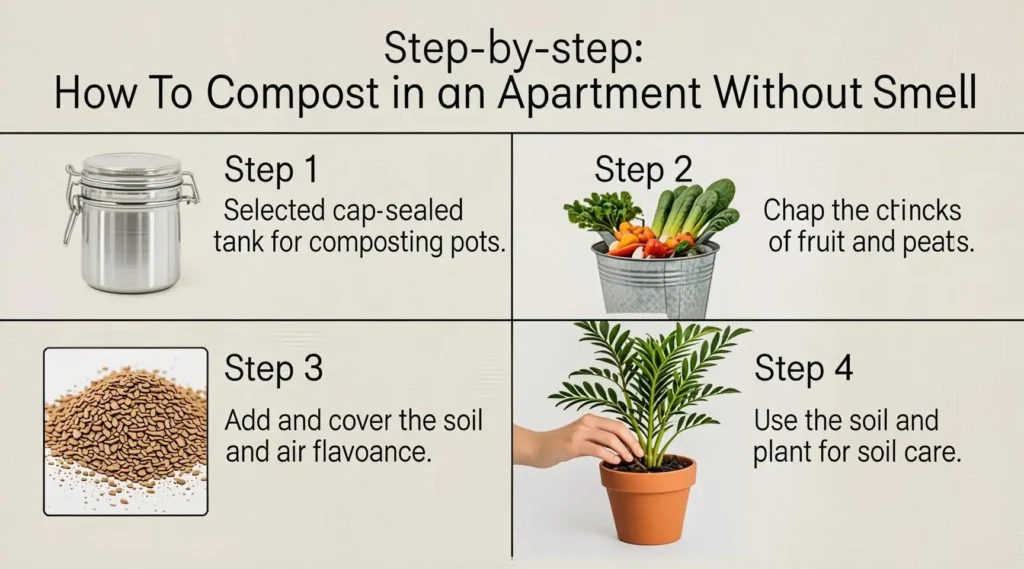
Follow these steps for clean, odor-free composting.
1. Select Your Bin
Pick a bin with a tight lid and odor filter. Bokashi and worm bins are best for beginners.
2. Add Bedding Or Starter Material
If using worms, add bedding like shredded paper or coconut coir. For Bokashi, add bran. Traditional bins need a layer of dry browns at the bottom.
3. Add Food Scraps
Cut scraps into small pieces. This helps them break down faster and reduces smell. Always cover fresh scraps with browns (paper, cardboard) or Bokashi bran.
4. Control Moisture
Compost should be damp, like a wrung-out sponge. Too wet causes smell; too dry slows breakdown. If you see puddles, add dry browns. If it’s dry, sprinkle water.
5. Turn Or Mix Regularly
Mixing adds air and prevents odor. For worm bins, gently stir bedding once a week. Bokashi bins don’t need turning.
6. Drain Excess Liquid
Bokashi bins produce liquid (“Bokashi tea”). Drain this every few days. Too much liquid in any bin leads to smell.
7. Watch For Signs Of Trouble
If you smell rotten eggs, something is wrong. Usually, it’s too wet or not enough air. Fix by adding dry material and mixing.
8. Harvest Compost
After a few weeks or months, your compost will look dark and crumbly. Use it for indoor plants, balcony gardens, or donate to a local community garden.
Practical Tips For Odor-free Composting
Even experienced composters can make mistakes. Here are smart ways to keep your bin fresh.
Keep A Balance
Always add equal amounts of greens and browns. Too many greens (food scraps) create smell. Too many browns slow the process.
Chop Scraps Small
Large pieces break down slowly and can smell. Cut scraps before adding.
Clean Your Bin
Wash your bin every few months with mild soap and water. This removes old residue and bacteria.
Use Filters
Replace carbon filters every 3-6 months. They absorb smells and keep the air fresh.
Freeze Scraps
If you don’t have enough browns, freeze food scraps until you’re ready to compost. This also prevents smell.
Add Coffee Grounds
Coffee grounds are rich in nitrogen and mask odors. Sprinkle them over fresh scraps.
Avoid Overfilling
Never fill your bin to the top. Leave space for air and mixing.
Common Mistakes Beginners Make
Even with the best intentions, beginners often make errors that lead to smell.
Mistake 1: Adding Too Much Wet Material
Too many fruit or veggie scraps without enough dry material causes soggy, smelly compost.
Mistake 2: Forgetting To Mix
Compost needs air. Not mixing leads to anaerobic conditions (no oxygen), causing stink.
Mistake 3: Not Draining Liquid
Especially with Bokashi or worm bins, excess liquid creates odor. Drain regularly.
Mistake 4: Using Wrong Materials
Meat, dairy, and oily foods can’t be composted in most bins. Stick to plant-based scraps.
Mistake 5: Ignoring Signs
If you notice flies or bad smells, act fast. Add dry material, mix, or clean the bin.

How To Manage Compost Liquid And Leachate
Many indoor bins produce liquid as scraps break down. This liquid, called leachate or “compost tea,” can cause smell if not managed.
What Is Leachate?
Leachate is the liquid that drains from compost as materials break down. It’s common in Bokashi and worm bins.
How To Handle It
- Drain leachate every few days.
- Use leachate as fertilizer for plants (dilute 1: 10 with water).
- Never let leachate sit in the bin—it causes stink.
Why Is Leachate Useful?
Leachate is rich in nutrients. Used properly, it helps houseplants grow. Just remember to dilute, as it can be strong.
Composting For Small Kitchens: Smart Solutions
If you live in a studio or have a tiny kitchen, space-saving bins are best. Some bins are designed for small kitchens and come with advanced odor control.
To find the most effective and compact bins for odor-free composting, check out this resource: Best Compost Bin for Small Kitchen No Smell.
Table: Best Indoor Compost Bin Features
Here’s a quick look at top features for apartment compost bins:
| Feature | Benefit | Recommended For |
|---|---|---|
| Carbon Filter | Absorbs odors | Small kitchens |
| Drainage Spout | Removes excess liquid | Bokashi bins |
| Airtight Seal | Keeps smells in | All bins |
| Compact Size | Fits anywhere | Studio apartments |

Advanced Odor Control: Non-obvious Tips
Most guides cover basics, but here are some advanced ways to keep your compost bin fresh:
1. Use Baking Soda
Sprinkle a little baking soda in your bin to neutralize acids and odors. Don’t overdo it—too much can harm microbes.
2. Add Charcoal
Place a piece of activated charcoal near the lid. Charcoal absorbs smells and works even when filters are old.
3. Include Dry Leaves
Dry leaves add carbon and improve air flow. If you don’t have leaves, use shredded paper.
4. Citrus Peels For Freshness
Small amounts of citrus peels can mask odors. They also keep pests away.
5. Keep A Scrap Container
Use a small container for daily scraps, and empty it into the main bin once a day. This keeps your kitchen clean and prevents smell buildup.
Troubleshooting: Fixing Smelly Compost
If your compost smells bad, don’t panic. Most problems are easy to fix.
Odor Type: Rotten Eggs
- Cause: Too wet, not enough air.
- Solution: Add dry browns, mix compost.
Odor Type: Vinegar
- Cause: Too much citrus or acidic food.
- Solution: Add more paper or leaves.
Odor Type: Garbage
- Cause: Wrong materials (meat, dairy).
- Solution: Remove bad items, wash bin.
Odor Type: Ammonia
- Cause: Too much green material.
- Solution: Add more browns.
Table: Odor Troubleshooting Guide
| Odor | Likely Cause | Quick Fix |
|---|---|---|
| Rotten Eggs | Too wet, low air | Add dry browns, mix |
| Vinegar | Acidic scraps | Add paper, balance greens |
| Garbage | Meat/dairy scraps | Remove, clean bin |
| Ammonia | Excess greens | Add browns |
Composting On Balcony Or Outdoor Space
If your apartment has a balcony, you can compost outside. Outdoor bins allow larger volumes and more air. However, you still need to control smell.
Tips For Balcony Composting
- Use bins with tight lids and filters.
- Protect from rain and sun.
- Add extra browns to balance moisture.
- Check for pests (flies, rodents).
Outdoor bins can be larger, but remember: more scraps mean more risk of smell if not managed.
Using Finished Compost
Once your compost is ready, use it for:
- Houseplants: Mix compost with potting soil.
- Balcony gardens: Spread compost around plant roots.
- Community gardens: Donate extra compost.
- Herb planters: Boost growth and flavor.
Finished compost is dark, crumbly, and smells earthy—not rotten.
Composting As A Lifestyle: Building Habits
Composting is more than just a chore. It’s a habit that makes your home greener and cleaner. Here’s how to make composting part of your daily routine:
- Keep your bin in a visible spot.
- Set reminders to mix and drain.
- Teach family or roommates how to compost.
- Celebrate your progress—track how much waste you save.
For more tips on integrating composting into a busy kitchen, see: Best Compost Bin for Small Kitchen No Smell.
Composting And Apartment Rules
Some apartments have rules about composting. Before starting, check with your landlord or property manager. Most bins are clean and safe, but rules can vary.
What To Ask
- Are compost bins allowed indoors?
- Can compost be kept on balconies?
- Is there a community compost program?
If rules are strict, Bokashi or electric composters are usually allowed because they are sealed and odor-free.
Real Examples: Apartment Compost Success Stories
Many people have started composting in apartments with great results.
Example 1: Studio Apartment In New York
Emily used a Bokashi bin under her sink. She composted all her food scraps, drained the liquid weekly, and never noticed a smell. Her plants grew faster with homemade compost.
Example 2: Family In Toronto
A family of four used a worm bin in their kitchen closet. They chopped scraps small, mixed bedding, and harvested compost every three months. No odors, and kids learned about recycling.
Example 3: Balcony Composting In Sydney
Tom used a traditional bin on his balcony. He added extra paper, checked moisture, and used a filter. His neighbors never complained about smell.
These stories show that composting works—even in small, crowded apartments.
Environmental Impact: Why Apartment Composting Matters
Composting reduces landfill waste. Every year, over 30% of household waste is food scraps. When you compost, you help cut methane emissions, which contribute to global warming.
According to the EPA, food waste is the single largest component in landfills. Composting in apartments is a small action, but it makes a big difference.
Frequently Asked Questions
What Is The Best Compost Bin For Apartment Use?
The best bin depends on your needs. Bokashi bins are great for odor control and can compost almost anything. Worm bins are good for families and produce rich compost. Electric composters are fast and sealed. For more options, see: Best Compost Bin for Small Kitchen No Smell.
How Do I Prevent Fruit Flies In My Compost Bin?
Fruit flies come when scraps are exposed. Always cover fresh scraps with dry material (paper, leaves), keep the lid tight, and empty the bin regularly. If flies appear, clean the bin and freeze scraps before adding.
Can I Compost Meat And Dairy In My Apartment?
Most bins can’t handle meat and dairy—they cause smell and attract pests. Bokashi bins are the exception; they can compost these items because of the anaerobic process. Electric composters can also process some meat.
What Should I Do If My Compost Smells Bad?
Bad smells mean something is wrong. Check moisture (too wet), balance greens and browns, and mix compost to add air. Remove any wrong materials like meat or dairy. Clean the bin if needed.
How Long Does It Take To Make Compost Indoors?
Compost time depends on the method and bin. Bokashi takes 2-4 weeks for fermentation. Worm bins produce compost in 2-3 months. Traditional bins can take 4-6 months. Electric composters work in hours, but the result needs curing before use.
Composting in an apartment is simple, clean, and rewarding if you follow these steps. By choosing the right bin, balancing materials, and controlling moisture, you can turn kitchen scraps into rich compost—without any smell. Your plants will thank you, and so will the planet. If you want to start composting today, pick a method, get your bin, and enjoy a greener, fresher home. For more in-depth guides and product reviews, visit EPA Composting Basics.